2015 Nov 18
by Kanchana Ranasinghe
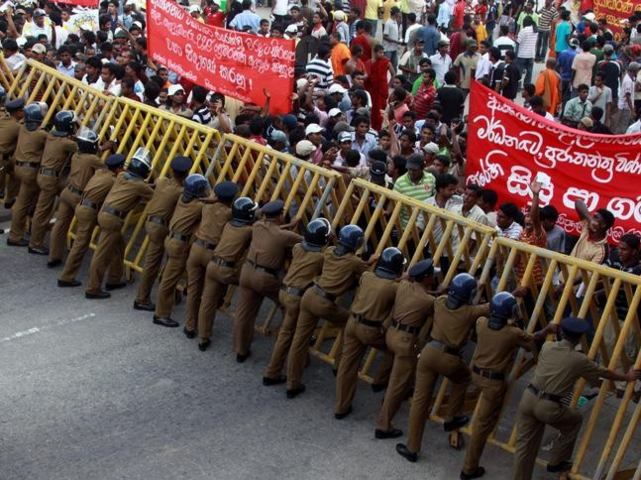
Late for work once again? Swearing at those uni-kids protesting on the streets creating all that havoc and traffic? Guess we’re in the same boat. To many of us in Colombo, the very phrase “government universities” brings to mind that image of long parades with bill boards asking for this and that blocking the already congested roads. The students often getting violent for the craziest reasons just adds on to the anger.
On the other hand, we rarely envision those students from impoverished families in very ends of the country attempting to break some shackles of misfortune after entering campus ensuing years of absolute commitment and sacrifice to studying. Seldom does the image of inadequate facilities and infrastructure or undue discrimination within these state campuses enter our minds.
Is that the problem?
However as we take a closer look, noting how unfair it is to expect ‘free education’ to be perfect when even the paid ones aren’t, we happen to notice that most protests by students aren’t essentially regarding these issues. Phrases of the likes of “HNDA” and “Rakiya Wirahitha Upaadidhaari” and “Upaadi Kada Wasaa Damanu” written across those placards carried during protests may have stuck in our heads.
For most of these students an only concern is receiving an adequate job with a decent salary. And the government’s failure to do so is indeed a key reason behind all this. Countless degree holders ends up unemployed as a result of the curriculums in this institutions being either out-of-date or not catering to the corporate needs. The other reason is the lack of investments in certain fields; most national concern is always concentrated upon selected avenues. The root problem is thus linked back to the decision making bodies.
And the strikes and protests?
So let’s have a look at where these vehement voicing out of opinions by students fits in. A majority from not too wealthy backgrounds begin that campus life with much pressure to somehow break through after graduating, and the fear of ending up as an unemployed degree-holder simply adds up to create that constant mentality of worry. In that state, the vaguest things that could affect their future, like private universities and unequal status for HNDA qualifications, quickly come out as things they need to stand up against.
The political organization within take all advantage of these situations to push their ideals into these young minds and rally as much students as they can for their protests; thus the whole fiasco begins!
A significant blame must fall upon the numerous political individuals outside these student bodies attempting to build as much chaos as they can by exploiting these students’ position. Oh, and we definitely can’t forget the random jolly kid joining in some peaceful protest with a fancy banner or placard just to have his share of fun.
The Private Unis
With all sorts of sparks flying around, the brightest seems to be that of the “private universities”. The protesters have a number of reasons for their objections against allowing the setting up of these institutions. A few visible effects on them include dragging of their resources to these campuses (higher pay attracts lecturers, etc) and higher competition in the job market from those with better facilities. However interestingly, the biggest issues seem to be those of principle, regarding how money should not buy education, failed students should not be admitted and whatnot.
The issue of private medical faculties is a far pressing concern, shared even by the relevant professional bodies, about how graduates of such private institutions lack the required training which is crucial for industries of the likes of healthcare. This harder to defend accusation has been one highlighted throughout the recent past.
State Obligation or Investment?
Having witnessed all these happenings thus far, one may question the role of a government in this scenario; are responsibilities being evaded or do we witness a simple solution to the ever-increasing demand for higher education?
To many Sri Lankans, provision of not just free primary and secondary, but also ‘free’ tertiary education seems to be an absolute obligation on the part of the government. But to the rest, the obligation embodies only to the extent of making it available in the case of tertiary education, and the subsidising may be witnessed simply as an optional investment by the government to expand markets. Whatever is the case, the government must take steps to ensure the demands and needs of these youth are met with adequate solutions.
The Future…
A lot of vagueness always obscures the future of everyone, not just the troubled university students of this country. It is apt for us to realize that in a modern world of this calibre, a simple smart phone and internet may be sufficient to gather all the knowledge one could receive through any educational institution. Research opportunities are also ample for those armed with the necessary insight and passion. The market today may not really be eyeing that fancy degree one earns at College but the real skills and knowledge within you; and no amount of protesting can instil in one those bare necessities.