
2017 Jul 7
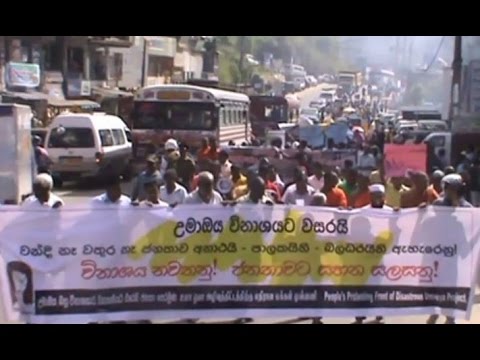
On 28 June, residents of Bandarawela took to the streets and conducted a widespread hartal campaign. Bandarawela practically became a ghost town. Shops and businesses were closed, transport services were deprived, and black flags were hoisted by the masses.
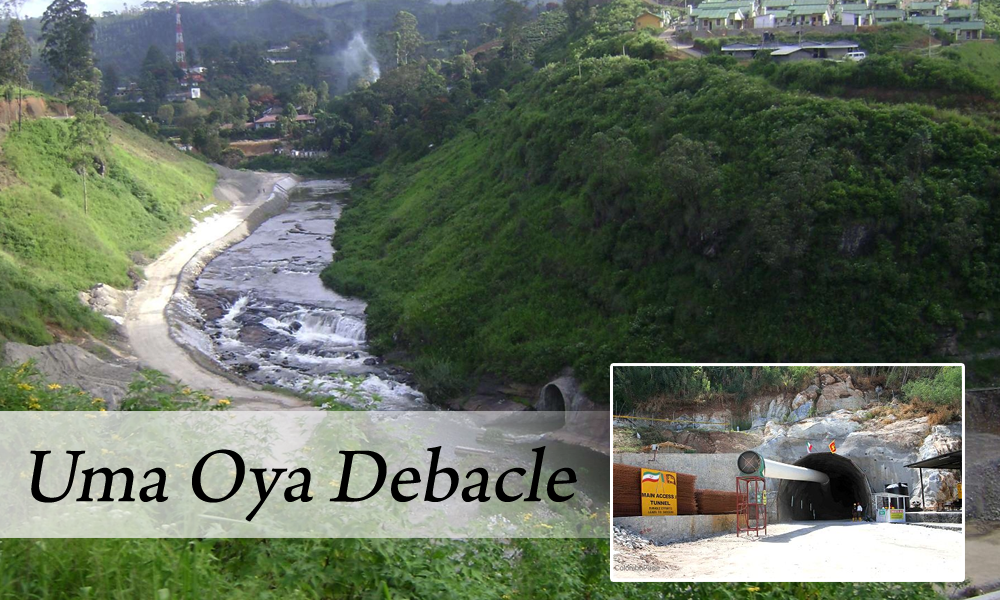
This was the result of years of distress inflicted on citizens by the Uma Oya Multi-purpose Development Project (UOMDP).
The UOMDP is alleged to be one of the worst environmental disasters Sri Lanka has ever had to face.
Although the project was launched with the intention of providing water to certain regions of the South-east, ironically, it created an acute water shortage in other regions of the South-east.
Quick facts:
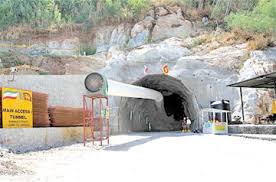
- The Uma Oya Multi-purpose Development project is an irrigation and hydroelectric complex.
- The main aim at the time of its launch was to provide water to the Mattala Airport, Hambantota Industrial Zone, Hambantota Port, and Hambantota Oil Refinery.
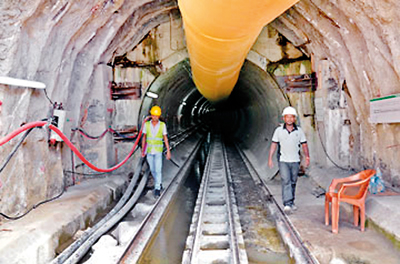
- The project’s plan comprised of the construction of two dams, a 26 km long tunnel complex, and an underground powerhouse.
- The project was a collective venture of the Ministry of Irrigation and Water Management, Ministry of Power and Energy, Ministry of Mahaweli Development and Environment, and the Ceylon Electricity Board (CEB).
- The estimated cost of the project is Rs. 529 million.
- 85% is funded by a loan from the Iranian Government.
- The Iranian company FARAB Energy and Water Project Company is the chief contractor.
The project was initially proposed in 1991, but rejected on the basis that it would violate water rights of the people owing to technical faults of the proposal.
However, the project was approved and launched in 2008 under the previous government.
The Environment Impact Assessment (EIA) report was compiled two years AFTER the official launch of the project, and was found to be outdated, inaccurate, and incomprehensive.
During the 30-day period it was open to public review, it received masses of negative responses.
However, amidst all this opposition, the Central Environment Authority (CEA) proceeded with the project.
In December 2014, villages of the Ella and Bandarawela Divisional Secretariats witnessed cracks in their houses; a result brought about by vibrations from the tunnel construction.
Decreasing levels of groundwater were also observed. The CEA discovered a leak which poured 250 litres of water per second into the underground tunnel system.
Even though the first phase of the project had been completed, the current government led by Maithripala Sirisena temporarily suspended the project in 2015 in the face of severe opposition, but it was resumed not long after, in 2016.
No light at the end of the 26 km long tunnel…
10 years after the project’s implementation, the impacts of the project are cataclysmic, to say the least.
The project was found to be flawed right from its design.
The execution based on the faulty EIA report become progressively faulty in its entirety.
Incompetent engineers also failed to follow instructions, leading to disastrous blunders.
Resettlement and compensation operations have not been conducted appropriately or justly either. Residents in Puhulpola resettled in Mirahawatte under illusions of an appealing life, only to realize that the region did not even have a proper road.
Residents were promised employment for their children through the completion of the project, and never made aware of the negative effects.
80 million litres of water now seeps out daily through a leak in the tunnel.
The result?
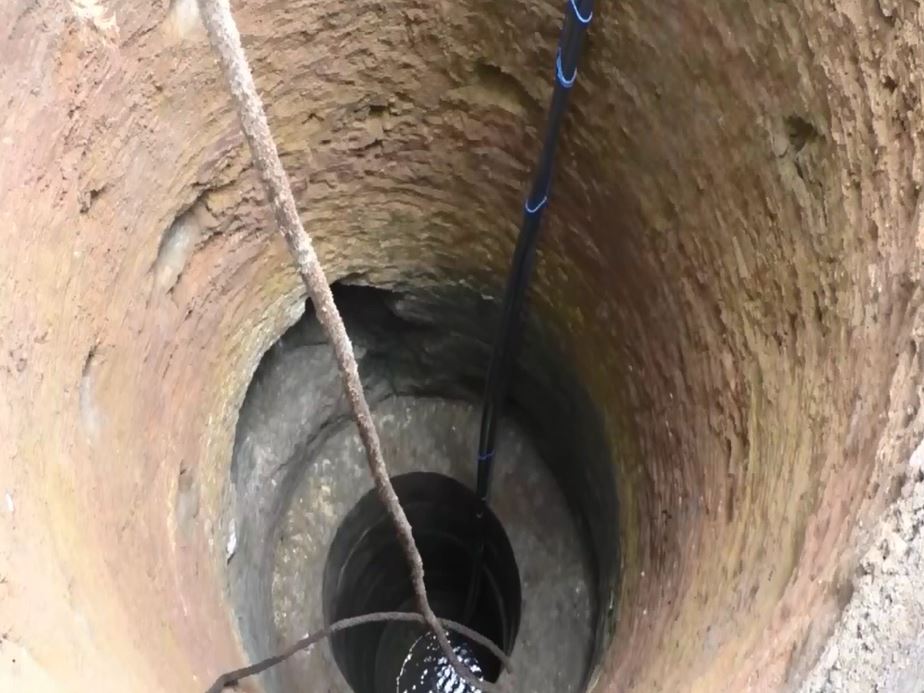
Groundwater reserves have been severely depleted as a result.
Over 7,000 houses have sustained cracks and other damages.
Over 2,000 springs and wells have dried up.
Acres of farmland became barren and unsuitable for vegetation.
Thousands lost their livelihoods as a result.
Residents were displaced from their homes.
Schools, temples, kovils, mosques and churches have been completely destroyed.
Hambantota, Moneragala and Badulla suffered the greatest impact.
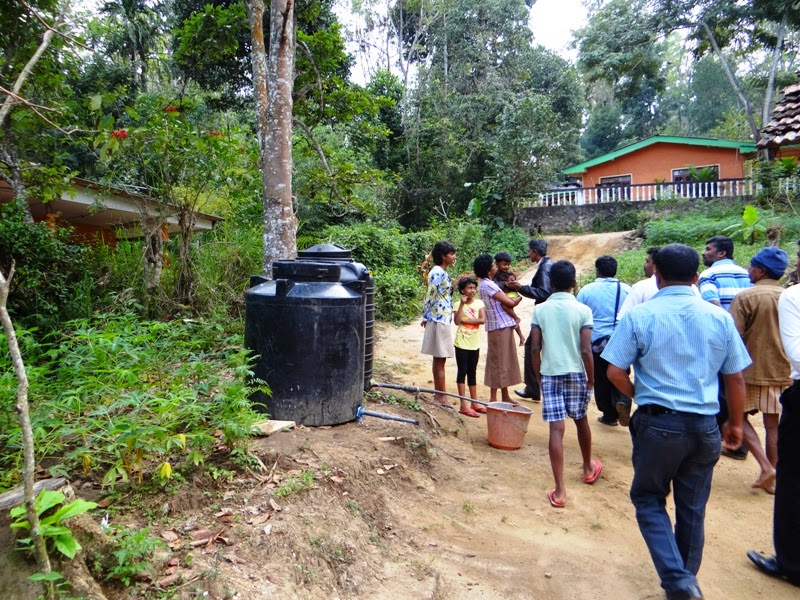
These areas now have to be supplied with water through bowsers even for day-day-activities. Residents complain that the water quota per week is not enough to even sustain a day.
A game of tennis between governments

For years, the Government paid no attention to the hardships of the people. They jumped to action only after the Bandarawela residents launched a full-fledged hartal campaign.
Now, both the preceding and present governments are putting the blame on each other, throwing the ball back and forth.
Former President Mahinda Rajapaksa claims that the calamity occurred as a result of the present government’s decision to halt the project’s progress, leaving a half-constructed tunnel gaping wide open.
Meanwhile, current President Maithripala Sirisena claims that he himself opposed the project when it was launched under the previous regime.
But here are the facts:
The preceding government launched the project and completed 16% of the project.
The current government accelerated the process and completed 62% of the project.
Clearly, both parties are to be blamed, and as such, both must take responsibility.
Damage control
The Government is now seeking the assistance of foreign experts from Norway, Switzerland and Germany. They are also considering the potential suspension of the project.
The majority however argues that abandoning the project after 80% has been completed is not a suitable solution, as most of the damage has already been done.
Regardless of whether the project will be abandoned or completed, victims must be compensated fairly and environmental damage incurred must be reversed. If the project is to be seen through, future damage MUST be prevented before completion.
The priority now must be to fulfil the initial aim of providing water to the South-eastern region of the island, whilst simultaneously shielding the Badulla, Hambantota and Moneragala districts from adverse side effects.
Let this be a lesson for all…

One problem must not be solved by creating another problem.
A faulty foundation and a faulty plan will undoubtedly lead to a faulty implementation and a faulty execution.
Furthermore, the CEA must function as an incorrupt, independent, and dutiful body whose chief aim is to protect and conserve the environment. A complete overhaul may be the only way to achieve this.


