2016 Jun 7
by Vandana Hiranand
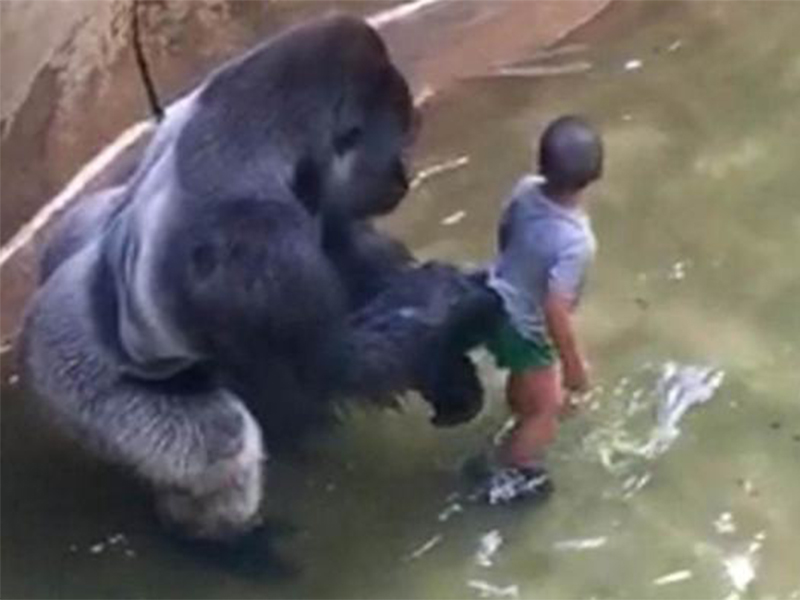
On the 28th of May this year, social media erupted when Harambe the Gorilla was shot by zookeepers at the Cincinnati Zoo. Isaiah, a four-year old boy, fell into the Gorilla World exhibit, landing in the enclosure containing the Silverback. Ten minutes later, zoo authorities arrived on the scene and made the painfully tough decision to shoot down Harambe, in order to prevent the young boy from being harmed.
Naturally, the general public was outraged at the loss of such a beautiful, rare and intelligent animal. As always, the public divided into two sides of every argument. Some viewers present at the zoo described how the gorilla violently dragged the child through water, proven by the serious injuries the child faced. However, a large number of people illustrated how Harambe was holding the boy’s hand in a gentle manner. Many experts who have worked alongside Silverback gorillas have spoken out regarding the possibly gentle, yet unpredictable nature of gorillas. Unfortunately, Harambe’s intentions can never be known. Yet, many have expressed their support for the delicate and quick decision the zookeepers had to make.
Another debate has rapidly caught fire across the internet, even amongst Sri Lankan citizens, regarding Michelle Gregg, the mother of young Isaiah. Many have chalked up the incident to irresponsibility on Gregg’s part, enraged by her carelessness. On the other hand, many parents have voiced their support for Gregg, speaking of how toddlers are fast and vanish in mere seconds when parents look the other way.
Arguments have broken out, opinions hashed, and countless judgments posted about whom must be blamed. Yet, one important aspect has been largely ignored: the zoo. An establishment which is supposed to protect animals failed in its security, resulting in the death of an intelligent, endangered animal. It brings into question why such an establishment exists in the first place.
As Sri Lankan citizens, hundreds voiced their fury about Harambe. Hundreds attacked the mother, while a hundred more defended her. This spark was ignited over the death of a wonderful animal that lived 14,000 kilometers away. The tragedy of Harambe has spurred an interest among zoo animals in general, showcasing how millions of Sri Lankans are ignorant of similar tragedies; these being the neglect and death of our precious wildlife which takes place every day in our very own country.
The Dehiwala Zoo is believed to be a sanctuary for Sri Lankan wildlife. It is supposed to be a safe and protective place which cares for all animals. Yet, recent extensive research into the conditions at this zoo has diminished any hope of it being a productive establishment.
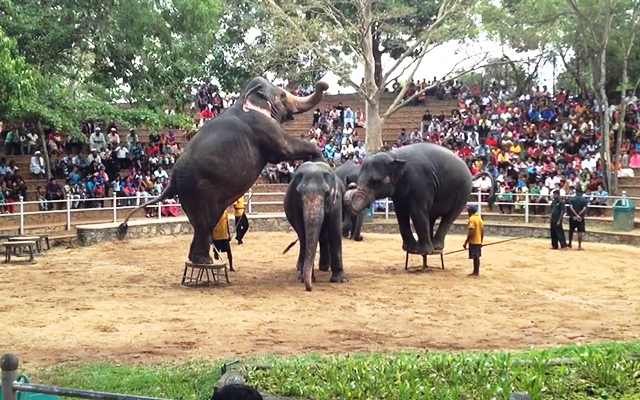
The animals housed in the zoo are undergoing severe maltreatment and neglect. Confinement in relatively small areas and harsh conditions have led to animals who are mentally and physically disturbed, along with many who have died due to this cruel environment. A large number are left to burn in the scorching sun daily. Many animals are forced to perform each and every day, to entertain the masses who flood through the gates to gawk at them. Humble animals such as the elephants are tortured and strained in order to master these inhumane performing acts. For a country which takes pride in its beautiful elephants, we have a disillusioned notion of how to respect these magnificent creatures.
In June 2013, an albino turtle, which was forcedly handed over from the Kosgoda turtle hatchery, was found dead. Investigations were launched, yet nothing fruitful accomplished. In December 2013, a female anaconda swallowed and ate a male anaconda. Sources have reported that the female acted out of starvation. In June 2014, a lion and hippopotamus were found dead, with no viable explanation given.
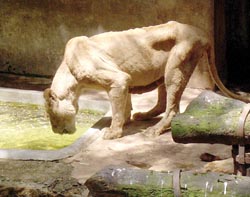
And so the list goes on. Animals in the zoo are observed to be exhibiting distressing symptoms and permanent lethargy. They are fed a minimal, dismal amount daily, which scarcely keeps them alive, and definitely not healthy. Extra food is reportedly smuggled out daily by zookeepers and other staff. Animals are purposefully bred in captivity, in order to be traded illegally. Exotic animals such as the tiger, lion and macaw are housed in dreary conditions and then used for trading.
This is not how animals live in the wild. This is not how animals behave in the wild. These are animals that have been tortured and broken in spirit. There is nothing educational about the Dehiwala zoo, and absolutely nothing that the children of this country can learn from it. And yet, hundreds flock to the zoo every day to gape at animals who are suffering, to walk around a zoo which is increasingly empty, because of the number of deaths taking place rapidly.
As an educated country, we must understand that our wildlife needs to be protected. They have the right to live in their own environment, among their own species. The least we can do as a nation is to provide healthy sanctuaries for our animals to live in peace.
The deaths at the Dehiwala Zoo may not go viral, and may not flood social media, like Harambe. Yet, each animal captured in this zoo has suffered an equal amount. And these animals don’t live on the other side of the world. They live in our own country, where you can do something about it. Find out more about the Dehiwala zoo and spread awareness. If you have the opportunity to speak to a parent who plans on visiting the zoo with their child, try to educate them. Let the injustice of Harambe ignite the spark that leads to awareness of our zoo and justice for our animals.
Speak up for our animals, the same way you spoke up for Harambe. They deserve nothing less.