

2016 Jun 2
by Vandana Hiranand
Every now and then, someone you know breaks a foot, or an arm, or is hospitalized for an illness such as dengue. Our immediate reactions are to drop a text, sympathize, go help out where we can and try to cheer them up.
Also every now and then, someone you know begins to suffer from depression. Our immediate reactions are to shuffle our feet awkwardly, avoid eye contact, fail to say something helpful, and go whisper about it to our friends.
Notice the difference?
Sri Lanka has been identified by the WHO as a nation with one of the highest suicide rates globally. We were found to have an approximate rate of 28.8 deaths for every 100,000 people. It is said that every individual has personally encountered a minimum of 3 people suffering from a mental illness. And yet, our society remains vastly ignorant when it comes to mental illness and what it means.
Mental illness is a categorized as a secretive, embarrassing topic in our country. Going to a doctor for a physical discomfort does not raise any eyebrows, of course. Yet, visiting a therapist for a mental discomfort is viewed as abnormal and becomes the next piece of gossip. Our society ranges from people who are uncomfortable with discussing mental disorder to those who simply don’t believe it even exists!
As unbelievable as that sounds, it cannot be denied. Many Sri Lankan parents themselves continuously deny the mere possibility that their child may be suffering from depression, anxiety or even learning disorders. After all, he’s just ‘acting out’ isn’t he? He just wants attention and doesn’t want to do his homework, of course. Or it could be something completely arbitrary, like my personal favourite is the classic ‘he just spends too much time on that phone’.
A large portion of our society would even refuse to seek help for any psychological distress for fear of being labeled ‘crazy’ or ‘attention-seeking’. The stigma attached to mental illness in our country prevents many from living a normal healthy life. People who obtain a mental diagnosis run the risk of being treated differently by their peers and friends, if even to a slight extent. People will tiptoe around them, be uncomfortable and unsure of what to say. This applies to people suffering from mild depression, to schizophrenics and even those afflicted with disorders such as Down’s syndrome and dyslexia.
The level of ignorance regarding the facts and knowledge of psychological illness is probably even more terrifying. Our society believes that therapists are only for those with severe mental problems, rather than helpful for all individuals. Mental institutions are only for the ‘crazy’, rather than a productive establishment to help those with various levels and types of psychological distress. And of course, all of these individuals with learning disabilities are treated differently, without the realization that they too can have a regular lifestyle. Our society feels that ignoring it means it is not present, not real.
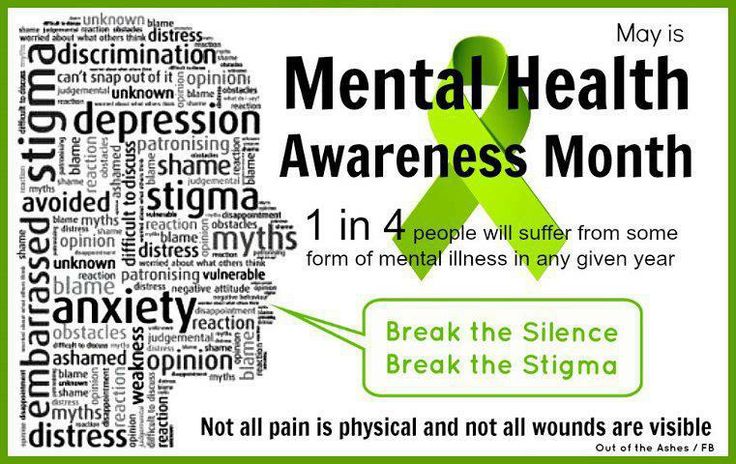
But it is real.
Hundreds of teenagers in our nation suffer from bullying, depression and the risk of suicide. We all know at least a handful of people who self harm on a regular basis. These issues have to be treated sensibly, with the right amount of knowledge and absence of any stigma, to help all those who suffer. Mental disorders such as schizophrenia, Bipolar disorder, autism, ADHD and many others are real, and no joking matter.
Ever since the devastating Tsunami of 2004, along with the end of the civil war in 2009, the awareness and treatment of mental health in Sri Lanka has been on the rise. The trauma caused by these events has brought to light the reality of severe mental illness, such as Post Traumatic Stress Disorder. Many individuals have begun to realize the importance of mental health care, yet the majority of our society still carries different levels of stigma to psychological disorder; a stigma which needs to be eradicated.
Mental illness cannot always be seen from the surface, but it is present underneath. Just because a person’s distress is not visible, does not mean it isn’t real. Denying the importance of mental health treatment causes more harm than good in any society. The general public believes that all mental problems are simply bad, and associating with these individuals is even worse. The continued ignorance of this topic in Sri Lanka will inevitably lead to more trauma, death and misery.
The next time you hear of someone facing mental distress, do not look uncomfortable. Don’t look down, just lend a sympathetic ear, and strike up a conversation the way you would do with anyone else you happen to meet. It’s time to start treating mental illness with the same attitude as physical illness.
Dealing with a mental illness makes one stronger, not weaker. By educating yourself and anyone around, you will be reducing the ignorance regarding mental disorders, increasing the awareness and lifting the stigma.