
2017 Sep 6
No woman wants an abortion as she wants an ice cream cone or a Porsche. She wants an abortion as an animal caught in a trap wants to gnaw off its own leg.
-Frederica Mathewes-Green
A fresh wave of the centuries-old debate on abortion gained momentum two weeks ago when news about a motion to legalize abortions on two specific counts came to light.
The archaic legal framework on ‘causing miscarriage’

The existing laws in Sri Lanka governing abortion do not explicitly use the word “abortion”. They instead refer to the act as “causing miscarriage”.
The laws presiding over the causing of said “miscarriage” are incorporated in the Penal Code of Sri Lanka. The sections addressing the causing of miscarriage have not been amended since their inception in 1883, when the British first introduced the Penal Code. As such, whilst countries around the world are revising their laws, Sri Lanka still follows the British-written archaic laws in the practice of abortion.
Section 303 of the Penal Code explains that an abortion can only be performed if it is in good faith to save the life of a woman. Anyone who conducts abortions for anything other than this purpose will be liable to a three-year imprisonment, or a fine, if not both.
If, however, the pregnancy is terminated after the foetus’s movements are felt, that is after 16 weeks, the imprisonment can extend up to 7 years.
A woman who intentionally “causes herself to miscarry” will also be liable to the same punishments mentioned in this section.
Under Section 304, the sentence scales up to 20 years if the pregnancy is terminated WITHOUT the mother’s consent, regardless of the stage of pregnancy at which the abortion is performed. Consent is therefore a pivotal point in the judicature governing abortions.
Section 305 then dictates that if the woman dies in the process of aborting the foetus, the sentence will again be hiked up to 20 years, regardless of the stage of pregnancy at which the abortion is performed. The section further explains that the law does not distinguish between the intent to kill and accidental death in such a situation.
Let us now backtrack through a few sections to Section 293, Explanation 3. This section explains that although aborting a foetus in the womb does not amount to homicide, if so much as a finger or a toe of the foetus has been brought forth from the mother’s body, it then counts as culpable homicide, regardless of whether “the child may not have breathed or been completely born”.
As Attorney-at-law, Prashantha Lal de Alwis, PC explains, the definition of “life” according to the Penal Code is therefore ridden with fallacies and is rather “artificial”.
“There is a very thin line between what separates a child from a foetus,” he added.
Around the world in 80 seconds
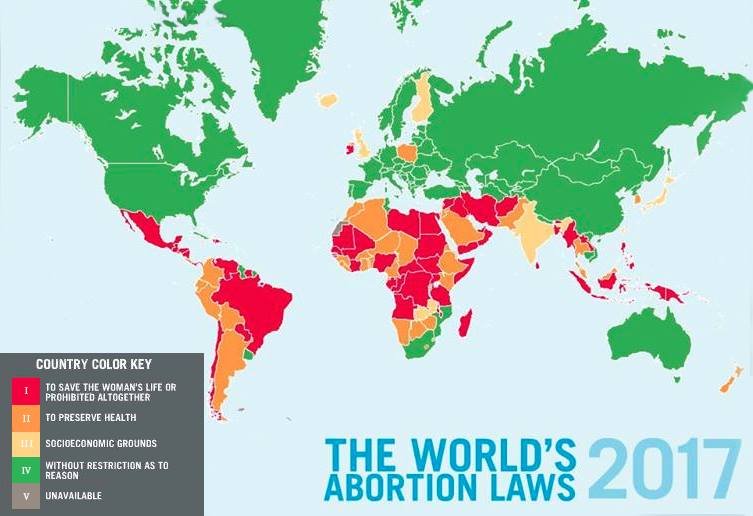
Abortion laws across the world vary from country to country. They even vary from state to state in the United States of America.
Abortion techniques were developed as early as 1550 BC. The historic Egyptian medical text Ebers Papyrus suggests that the vaginal insertion of plant fiber covered with honey and crushed dates can induce an abortion.
By the early 20th century, many countries commenced the relaxation of their anti-abortion laws, most often to protect the life of the woman, and in rare cases, on a woman’s request.
Countries such as Canada now follow a wholly pro-choice approach, where abortion is legal upon request at all stages of pregnancy.
In Norway, abortions are performed on demand during the first 12 weeks of gestation, by application up to the 18th week, and thereafter only under special circumstances until 21 weeks and 6 days, as the foetus is presumed to be viable beyond this point.
Out of the 196 countries in the world, only 5 countries – Dominican Republic, El Salvador, Nicaragua, Malta and the Vatican City – criminalize abortion completely.
Chile was also amongst the aforementioned group of countries that had the most restrictive and draconian abortion policies in the world. But two weeks ago the country eased their ban on abortion, allowing termination of pregnancies in certain cases, marking a truly progressive move.
Almost all countries in the world now allow abortion to save a woman’s life. Abortions for other reasons, however, such as in cases of rape, incest, congenital malformations, and economic and social reasons, are still not allowed in much of the world, and abortions on demand are allowed even less.
The cat that jumped out of the bag
Against this global backdrop, news about a proposed bill to legalize abortion on two more counts in Sri Lanka came to light two weeks ago, signaling a long-awaited step forward after over ten years of lobbying by medical practitioners far and wide.
According to the President of the Perinatal Society of Sri Lanka, Consultant Community Physician Dr. Kapila Jayaratne, the proposal recommends that abortion be legalized on two counts, namely conception in the case of rape, and lethal congenital malformations (fatal birth defects).
The following medical conditions deem the foetus unviable, according to the medically-authenticated proposal:
- Osteogenesis imperfect
- Osteochondrodysplasia
- Infantile osteopetrosis (malignant form)
- Bilateral renal agenesis
- Polycystic kidney (recessive form)
- Multicystic dysplastic kidneys
- Potter’s syndrome
- Congenital nephritic syndrome (with hydrops)
- Chromosomal disorders leading to degenerative lesions and brain and kidney involvement, such as vertebrae, anus, cardiovascular tree, trachea, oesophagus, renal system and limb buds (VACTERL) syndrome
- Severe bilateral hydronephrosis
- Alfa-thalassaemia with hydropsis foetalis
- Homozygote thrombotic disorders (i.e. protein C or factor V Leiden deficiency)
- Trisomy 8
- Trisomy 13
- Trisomy 16
- Trisomy 18
- Trisomy 3
- Any other confirmed lethal chromosomal abnormality
- Anencephaly Foetal hydrops
- Crie du Chat syndrome
- Holoprosencephaly
- Syringomyelia
- Cranioschisis
- Meningoencephalocele or hydroencephalocele
- Thanatophoric dysplasia
- Holoprosencephaly
- Ichthyosis congenital neonatum
- Schizencephaly
- Excencephalia
The proposed bill further outlines that the “ending of pregnancy” be permitted based on the recommendation of a panel, whose recommendation in turn will be based solely on medical evidence.
The proposal outlines an ideal panel as follows:
- A Board-certified specialist in Obstetrics & Gynecology
- A Board-certified specialist in Pediatrics or Neonatology
- At least one of the following:
- A Board-certified specialist in Radiology
- A Board-certified specialist in Psychiatry
“Where the law allows therapeutic abortion to be performed, the procedure should be performed by a physician competent to do so in premises approved by the appropriate authority”.
– Declaration of Oslo of 1970, issued by the World Medical Association
As Dr. Kapila Jayaratne explained, the proposed bill further states that the procedure should only be performed at a Government hospital where specialist gynecological services are available, by a specialist in Obstetrics and Gynecology who has been certified as a specialist in Obstetrics and Gynecology by the Postgraduate Institute of Medicine.
The drafted bill will first require cabinet approval. Once this hurdle is cleared, it will then be forwarded to the Parliament, where the bill will require a simple majority to be passed and subsequently implemented.
Because rape is never the victim’s fault
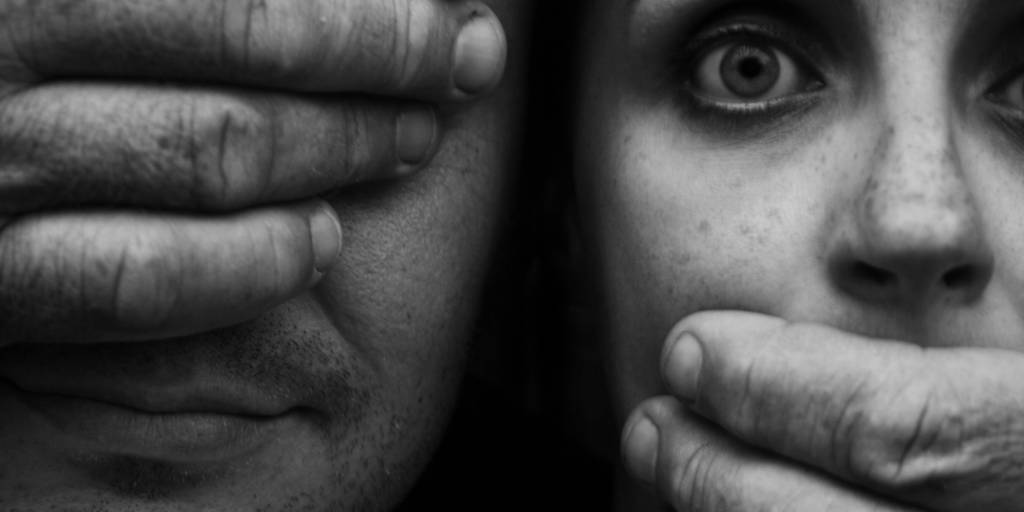
As the Indian author and educationist Amit Abraham said, “rape is a more heinous crime than murder since the rape victim dies throughout the period she lives”.
Rape is never the victim’s fault. A woman who conceived as a result of rape doesn’t end up in that unfortunate situation as a result of her own negligence.
The existing legal framework in Sri Lanka however compels such a woman impregnated as a result of rape to carry out the pregnancy for the full 40 weeks until birth.
The law puts emphasis on the woman’s well-being by prioritizing her life, but only in a physical sense.
According to the World Health Organization (WHO), health is defined as “a state of complete physical, mental and social well-being and not merely the absence of disease or infirmity”.
Shouldn’t the mental and social well-being of a woman then be considered too?
“Save the life and soul of the woman.”
-Attorney-at-Law, Prashantha Lal de Alwis, PC
To make matters worse, unlike in other countries, the State does not care for the child either.
For a woman who is ill, poor, or already overburdened with more children than she can care for, the birth of an unwanted child can therefore be disastrous.
If the mother is unable to provide for herself, her child and her family, she may end up resorting to prostitution to put food on the table. And if the mother fails to appropriately care for, nurture and provide for the child, he/she may also end up a criminal due to poor upbringing.
So think about these long-term effects on the rape victims and their offspring before you jump to say ‘no’ to abortion. Because all anti-abortion lobbyists will fight for the child for the nine months leading up to their birth, but once they’re born, they’re pretty much on their own.
“If you’re preborn you’re fine, but if you’re pre-schooled, you’re [not].”
-George Denis Patrick Carlin, American Comedian (1956–2008)
Isn’t it then better for both the child and the mother to terminate the pregnancy in case of conception by rape?
Lethal congenital malformation: pro-‘life’?

“I understand on a personal level the struggle of having a child with impairments as I have a son who is suffering from Autism. Whilst my son was much more fortunate than many others with similar impairments, there are children on the higher end of the impairment spectrum who do not survive and suffer immensely even if they do live for a short period.”
-Attorney At Law, Prashantha Lal de Alwis, PC
Fatal congenital deformities can be diagnosed at 20 weeks of gestation. However, the existing legal framework compels the mother to carry out the pregnancy for the full 40 weeks until birth.
Imagine the psychological torment the parents would go through for the next 20 weeks, burdened with the knowledge that the child they’re going to have will not survive. The most humane thing to do is to end their suffering as soon as possible, rather than force them to live in torture until the inevitable end falls on their heads with full force.
On the other hand, the life of a child born with a fatal congenital deformation would be so painful and short-lived that abortion would be the most compassionate option for the child too.
It baffles me as to why pro-life campaigners oppose the termination of pregnancy in the case of a lethal congenital malformation, where medical evidence confirms that the foetus is not viable. Doesn’t the term ‘pro-life’ itself imply that they are lobbyists of “life”? But life is not an option in the case of lethal defects. So what exactly are they fighting for?
Religious backlash
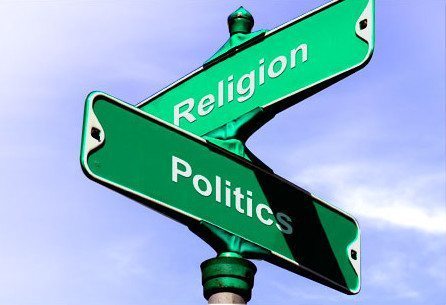
Whilst being a multi-cultural country certainly has its ups, like the rich history and unique traditions that come with it, it also means that we can never arrive at a consensus even on a simple matter because there will always be some that view it in a positive way and some that will adopt a pessimistic attitude towards it. Thanks to this difference in attitude of people, change has been consistently difficult to achieve in Sri Lankan society.
“Consensus is impossible to achieve in Sri Lanka even on a simple, obviously correct thing. So the only thing to do is to implement what is right.”
-Attorney at Law, Prashantha Lal de Alwis, PC
Soon after the press conference at the Family Health Bureau on August 22 where news on the abortion law reforms came to light, the Catholic Bishops Conference of Sri Lanka issued a letter, vehemently condemning the move.
They stated that one could not “safeguard one’s rights at the expense of violating the rights of another”.
Over the following weekend, the Archbishop of Colombo, Cardinal Malcolm Ranjith also condemned the bill, stating that abortion could not be considered as a human right.
‘In the contradiction lies the hope’
-Bertold Brecht

A number of contradictory statements began circulating ever since the public caught whiff of the potential reform of Sri Lankan abortion laws.
The Legal Draftsman, upon an inquiry, stated that the proposal had been approved by the cabinet of ministers, and that the Legal Draftsman’s Department was now waiting for the Justice Ministry to give the green light to commence the bill’s drafting process.
“The cabinet has approved the policy, we directly got it from the cabinet. but the respective ministry has to send out the official request in writing, which we have not received yet.”
– Legal Draftsman
The Co-cabinet Spokesperson and Minister of Health, Nutrition and Indigenous Medicine, Dr. Rajitha Senaratne however stated that he had not yet received such a proposal. He added that it was merely a proposal which had been brought to light during the Academic Sessions of the Sri Lanka Perinatal Society, and that a decision would be made once the proposal was submitted to the cabinet.
Expressing his own opinion on the matter, the Health Minister then said that it would be “inhumane to allow the birth of a congenitally deformed individual”, and added that “such foetuses should therefore be detected during the period of gestation to enable the termination of pregnancy”.
Meanwhile, a senior official from the Ministry of Justice revealed that although a cabinet memorandum on the matter had been circulated, progress had been held back after consultations with religious leaders.
“All religious leaders rejected the proposal except for one Muslim religious leader, who stated that abortion should be allowed up to 3 months of gestation,” she said.

The fraught debate
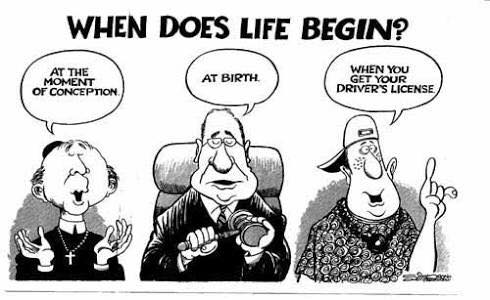
The topic of abortion has since ancient times sparked intense moral, ethical, political and legal debates, as it is “the fulcrum of a much broader ideological struggle in which the very meanings of the family, the state, motherhood and young women’s sexuality are contested”.
So the crux of the long, endless debate really comes down to the agonizingly basic trade-off of a foetus’s right to live vs. a woman’s right to control her body and her life.
A foetus’s right to live
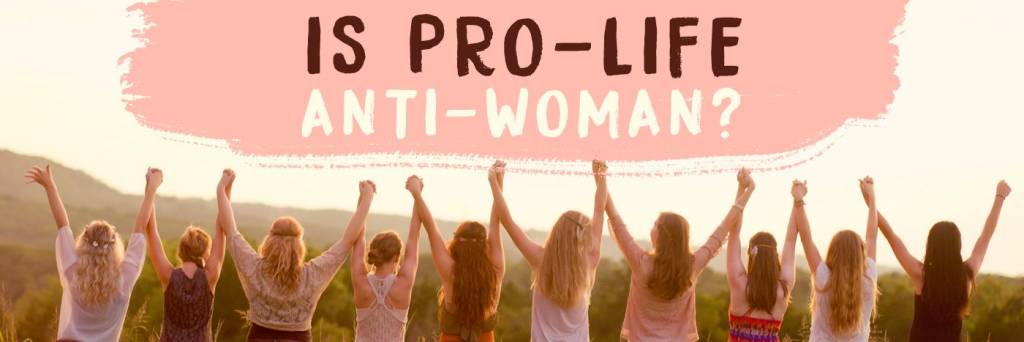
One central question therefore is, is the foetus a human being?
“If a foetus is a human being, how come the census doesn’t count them? If a foetus is a human being, how come when there’s a miscarriage, they don’t have a funeral? If a foetus is a human being, how come we say, ‘we have two children and one on the way’, instead of saying ‘we have three children’?”
-George Denis Patrick Carlin, American Comedian (1956-2008)
According to the Universal Declaration of Human Rights of 1948, human rights are only accorded to one from the point of birth.
Unborn babies therefore do not have rights under both the Constitution and the law of Sri Lanka.
As the former member of the Human Rights Commission of Sri Lanka, Dr. Prathibha Mahanamahewa explained, if unborn babies were considered as humans, then those caught in violation of Sections 303 through 305 of the Penal Code would have to be issued capital punishment or imprisoned until death. The punishment however only ranges from 3 to 20 years.
Women’s welfare and back-alley abortions
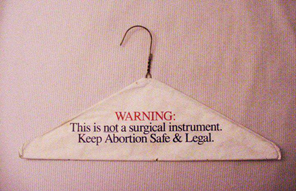
The principal driving force behind the struggle for abortion law reforms has been the concern for the welfare and rights of women. Women are experts of their own lives and bodies, not politicians, not law-makers, and certainly not anti-abortion advocates.
500 to 600 illegal abortions are performed in Sri Lanka daily. Illegal abortions pose a great risk to the mother’s life and health, and a significant number of consequential deaths has also been reported.
A study conducted in 2016 revealed that the highest incidences of illegal abortions are reported from Ja-ela, Katunayake, R. A. de Mel Mawatha, Ratmalana, and Jaffna, Dr. Mahanamahewa said.
“What is interesting,” he added, “is that most of these illegal abortions are performed on teenage girls.”
Both qualified doctors and unqualified personnel perform the procedure illegally in Sri Lanka. The study finds that charges vary from Rs. 7,000 to Rs. 75,000.
Airport Customs at the Bandaranaike International Airport on August 29 caught an Indian male who attempted to smuggle 16,930 tablets of Misoprostol, which are used as abortive pills, into the country, and the Wanathavilluwa Police apprehended 3 drug smugglers in possession of 39,700 illicit drugs and abortion pills just two days later (August 31). This is the black market in Sri Lanka our iron grip on abortion is ultimately feeding. Interestingly, studies conducted around the world have found that relaxation of abortion laws contributes to a reduction in crime rates too.

“Those with financial resources travel to Singapore and other countries to undergo abortion procedures safely. But the unfortunate who lack the funds end up having the procedure performed in Sri Lanka under less-than-acceptable conditions.”
-Dr- Prathibha Mahanamahewa, Former Human Rights Commissioner
Abortion is also a matter of economic inequity. When access to abortions is denied by law, the availability of abortion providers consequently diminishes. When the right to choose is thus curtailed, women with the financial capability will travel far and wide and undergo the procedure under safe conditions. Those without however will not be as fortunate. Abortion rights and economic justice are therefore inextricably linked.
As Dr. Mahanamahewa put it, “it is always the poor people that suffer in our country.”
The public poll
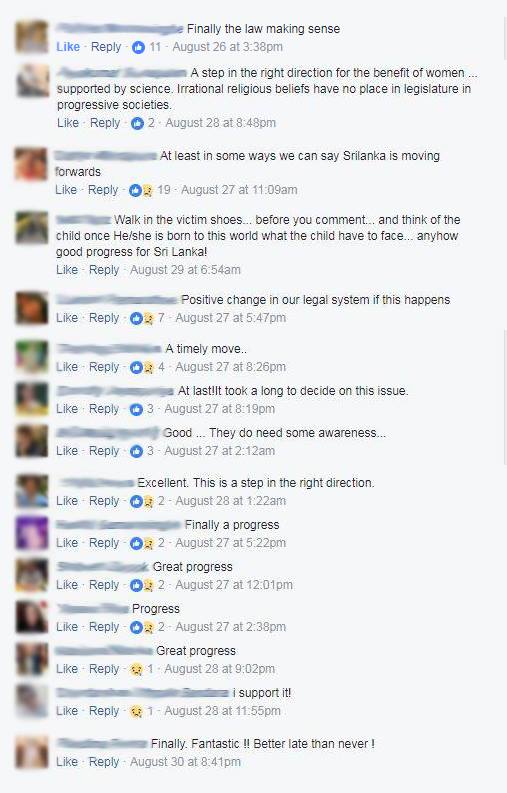
The majority seemed to think the proposed reform was a step forward for Sri Lanka:
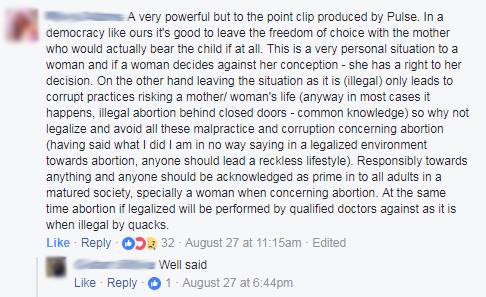
This comment in particular was certainly food for thought:
There was even one in French!

The excitement was real:

But of course, there was some religious backlash:
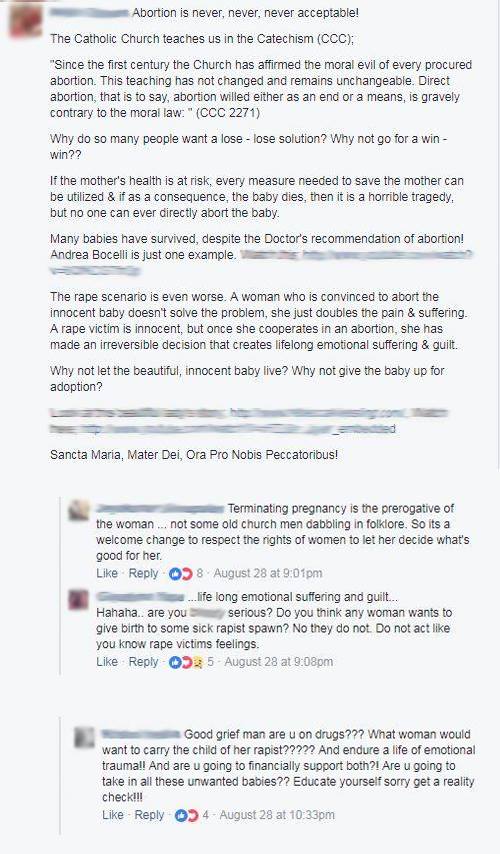
And even more religious dialogue…
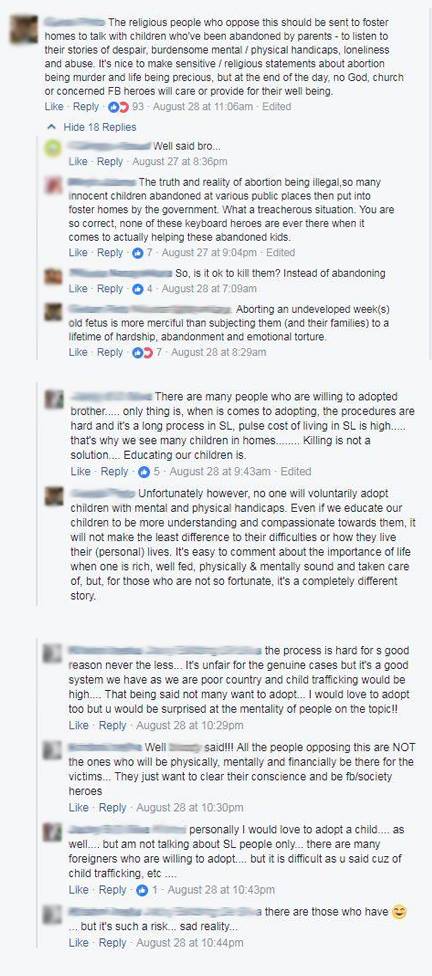
Then there was a strange suggestion:

Of course, nowadays nothing is complete without at least one Game of Thrones reference!

Epilogue: idealism vs. realism
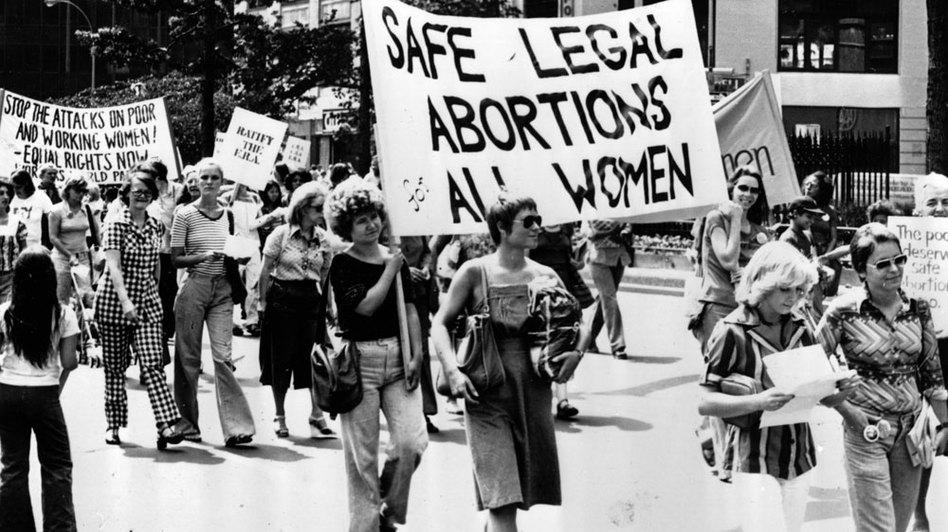
To those of you who are against abortion, here’s what I have to say:
Anti-abortion policies aim to bring about an end to abortion; but in truth, there will be no such thing. Abortion WILL continue whether it is legalized or not. Abortions were performed long before our time, and they will continue to be performed long after our time, regardless of whatever barricades are thrust in their way. As the saying goes, if there is a will, there is a way. And draconian laws prohibiting abortion will only serve to put a stop to safe and legal abortions, and will drive the poor to seek out back-alley “abortion providers”, putting their health, safety, and even their life on the line.
According to the World Health Organization (WHO), abortion rates have been found to be similar both in countries where the procedure is legal and in countries where it is not.
So whilst in an ideological situation, anti-abortion laws will put an end to abortion, in reality, anti-abortion laws will only threaten the lives of women.
Because the question is not will abortions be done, but how will they be done; in a legal, safe environment accessible to all regardless of economic status, or in a safe environment for the rich and in a risk-prone environment at the hands of an unqualified practitioner for the poor?
And if the abortion reform bill is passed, women will have the freedom to choose whether or not to terminate a pregnancy in the case of rape or a lethal congenital deformation in the foetus. If it goes against your faith, beliefs or customs, you are free to refrain from undergoing the procedure, so it by no means infringes on your individual freedom of choice.
But are you going to stand in the way of someone else’s freedom of choice?
“The need to terminate a pregnancy knows no political affiliation or religious faith. I’ve hugged, cried with and held the hands of hundreds of people who’ve had abortions, many of whom never thought they would.”
– Renee Bracey Sherman, Reproductive justice activist
So restructure your opinions to suit the real status quo, and not the idealized version of it.
Righteousness comes easily in these times of heavy polarization. And the more we dwell on our stance, the more we talk about it, the more we try to convince others that our way is the right way, the more we are convinced we are right, and the more distant we become from reality and practicality.
Imagine what this country would be like today if people hadn’t been willing to change their mindsets in the past. If change had been completely dismissed back then, there would still be no women in the workforce, as women were deprived of the freedom to work once upon a time.
The only way we are going to make progress on the “hard issues” as a country is by restructuring our beliefs and opinions to suit reality.


