2017 Nov 7
“What we are doing to the forests of the world is but a mirror reflection of what we are doing to ourselves and to one another.”
― Chris Maser, Forest Primeval: The Natural History of an Ancient Forest
Have you ever wondered what life would be like if you had to pay for some of the things you freely enjoy like clean air and clean water? Sadly, that is the reality for many thousands of Sri Lankans today. The drought which enveloped most of the island impacted 21 out of 25 districts as of August this year. 18 districts are still in a declared state of drought. Over 1.7 million Sri Lankans have no access to water as of 21 October 2017. In fact, certain districts have not received adequate rainfall in over 2 years.
Some will say these changes are natural cyclical changes due to global weather patterns. But can we point the finger at a global phenomenon and wash our hands of our own responsibilities? As a nation, have we done our duty in protecting our own natural resources?
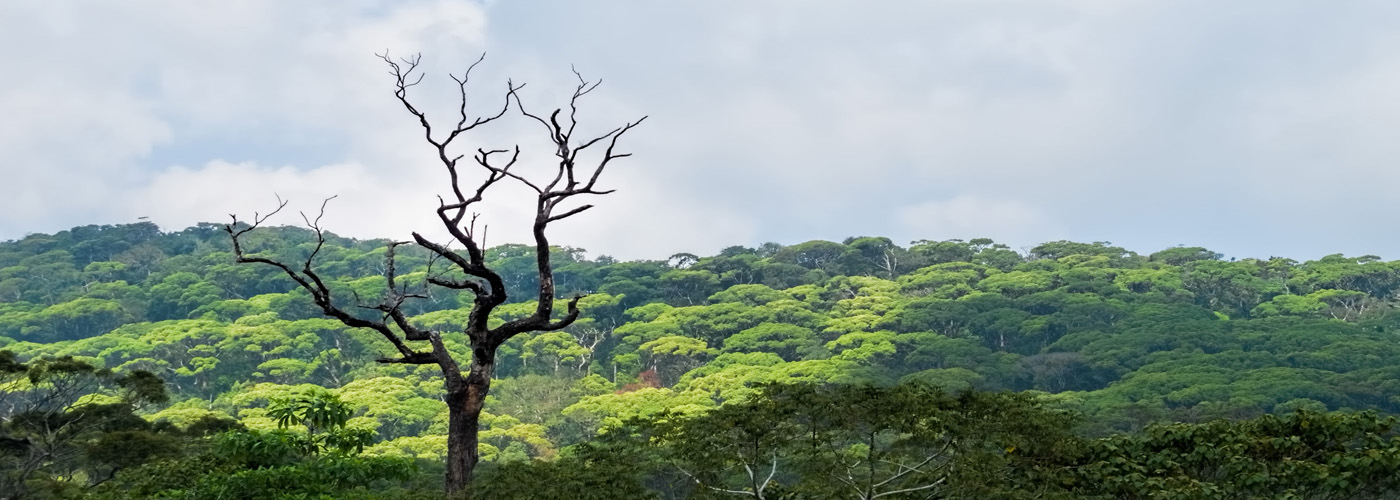
From 1990 – 2005, it was estimated that Sri Lanka’s deforestation rate of primary forests was one of the highest in the world. In that period alone, the country lost more than 35% of its old-growth forest cover (Rainforests, Mongabay). Conservation International estimates that only around 1.5% of the island’s original forest remains. According to environmentalists our existing forest cover is well below 18% of the country’s total land area.
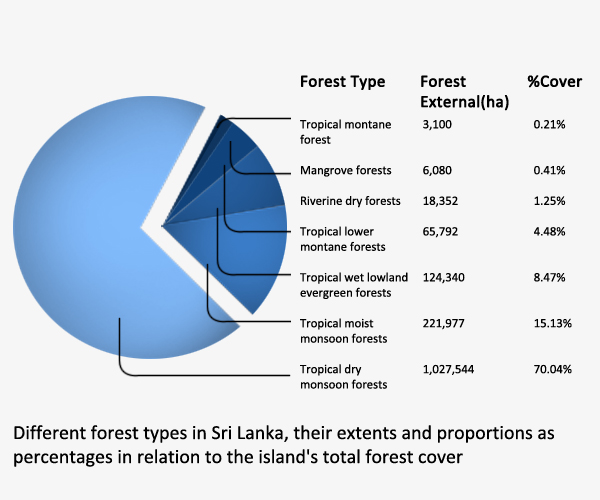
Much of Sri Lanka’s deforestation occurred under British colonial rule, when large areas of primary forest were cleared for commercial plantations like rubber, coffee, and tea however the deforestation has not stopped in the post-independence era. Sri Lanka’s forests which suffered greatly under the British rule, followed by the post-independence civil war era, are now facing an even greater threat, with the post war boom making way for very rapid and ill-panned development.
So what are the key drivers of deforestation in Sri Lanka today?
- Mega irrigation schemes such as the Moragahakanda Dam Project which was completed in November 2016 and flooded an area of forest 6 times the size of Parakramasamudraya or almost 7,500 acres, and The Yan Oya project which cost the country 3,500 acres of forest.
- Human encroachments where almost 4,000 acres of primary forest have been cleared in Wilpattu National Park alone due to illegal settlements which have occurred since 2014.
- Public infrastructure projects like roads and highways where almost 5,000 acres of much needed dry-zone forest in Hambantota was cleared for the Mattala airport. Additionally, 2 km of forest within the protected Sinharaja rainforest was cleared by the government for the Lankagama to Deniyaya road.
- Agriculture projects such as The Chinese backed Maduru Oya Right Bank Development Project set to launch later in 2017 will destroy almost 45,000 acres of forest for new settlements and agriculture
- Development schemes including Industrial development projects. Around 22,500 acres of forest in the Medirigiriya-Bisopura area have been handed over for development and nearly 32,000 acres of land in the Padaviya Forest Reserve are being cleared for potential development.
Just in the last year alone it is estimated that 120,000 acres of forest in Sri Lanka have come under threat from all the above key drivers of deforestation.
Sri Lanka’s population has soared from 2.4 million in 1946 to over 21 million in 2017. While the population continues to multiply, our life giving forests are being cleared at an unprecedented rate.

It is high time we understood the immeasurable ecological services provided by our forests which directly impacts human health and survival.
According to the The United Nations Economic Commission for Europe (UNECE) forest ecosystem services can be grouped into 4 areas:
- Provisioning:
Useful physical products of the forest such as food, wood, fibre and fuel.
- Regulating:
These are the ‘preventative’ benefits of forests: their role in erosion control, flood prevention, climate regulation, carbon sequestration and water purification.
- Cultural:
Forests are sources of aesthetic and spiritual regeneration as well as providing recreation and education, which supplies services for the tourism industry.
- Supporting:
This describes the role of ecosystems as a ‘nursery’ for other environmental benefits, such as nutrition cycling and soil formation. Biodiversity services such as species and habitat conservation fall into this category.
Out of these services, the following ecological services are most important as they directly impact human health and survival:
- Ground water recharge: Catching maximum rainfall and minimizing surface runoff while regulating the flow through the hydrological system
- Maintenance of soil quality: Organic material such as leaf and branch fall improves and maintains soil quality
- Preventing soil erosion and landslides: Tree cover and root system protects the soil from the direct impact of rainfall
- Modulating climate: Forests have a major impact on local weather systems and climate. Scientists claim trees are our greatest weapon against climate change due to their ability to sequester CO2 from the environment.
- Maintaining biodiversity: Providing habitat for other species.
So can we really blame it all on ‘Global Warming’? Have we not been the creators of our own destiny?
It is foolish to believe that deforestation has had no impact on our quality of living. The impact of rapid deforestation is now being felt throughout the island. Reflecting on the past 12 months alone will reveal that:
- Ground water resources are depleted in most parts of the island with thousands having to pay money to acquire their daily rations of water for basic functions such as drinking, bathing and cooking.
- Water scarcity and absence of rain has caused desertification and salinization leading to heavily reduced agricultural output with its own domino effect on socio-economic factors.
(72% of Sri Lanka’s population lives in rural areas and majority of them make a living directly or indirectly through agriculture. And no water means no agriculture). - Landslides are now a common occurrence during high rainfall periods in mountain areas such as Ratnapura, Bulathsinhala, Nuwara Eliya, Kandy and Kegalle.
- Local temperatures have become considerably warmer during the inter-monsoon periods. The monsoon periods have also shifted while extreme weather conditions like floods and droughts are the new norm.
- We continue to lose valuable species of flora and fauna and issues such as the Human-Elephant-Conflict (HEC) which are a direct result of habitat loss, continue to kill over 200 elephants and 50 humans a year. (According to the DWC in 2016, the HEC resulted in the deaths of 76 humans and 256 elephants)
Willingly or unwillingly, we are now in an era where the results of deforestation, namely – water scarcity, soil degradation and biodiversity loss – have brought about real costs, both social and economic. Just this year alone the government has had to allocate Rs. 100 billion for drought relief and been forced to import 500,000 metric tonnes of rice to meet local demand that has been left unmet due to the crippling drought.
We may have always known the importance of key ecosystem services provided by forests, but we have been slow to realize that these things could be worth a lot of money. Maybe this is nature’s way of teaching us all a lesson!
Placing an economic value on our forests maybe controversial, as generally the natural environment is considered ‘priceless’. However, modern economic mechanisms such as Payments for Environmental Services (PES) can be used to create a green economy where a user pays model attempts to pay for these important ecosystem services. (The Value of Forests – United Nations Report) Countries around the world including European, South American as well as African countries are adopting these approaches, as they now recognize just how important the role of the environment is, in terms of contributing to our well-being and economic prosperity. This is just one of the many modern approaches Sri Lanka can explore to combat deforestation.
We can no longer afford to sit back and allow deforestation to continue, as it will only continue to intensify the problems which are already felt by most of the country’s population. We also cannot fool ourselves into thinking we can increase our forest cover to 30%, as per the government’s wishful statements, while we continue to destroy our last remaining forests.
There is no life without forests. Forests give us the water we drink and the air that we breathe, while regulating our climate, keeping our island habitable, and play a critical role in maintaining biodiversity and providing habitat for the many species who share this island with us.
Understanding the importance of forests will help us stand up against deforestation. It is time for clear and decisive action by every one of us, in the fight to protect Sri Lanka’s last remaining forests.
Pages you can follow for more information and to stay abreast of issues relating to deforestation in Sri Lanka:
- Protect Wilpattu: @ProtectVilpattu
- Rainforest Protectors of Sri Lanka: @RainforestProtectors
- Protect Sri Lanka: @ProtectLK